 Meditation · Mindfulness · Enlightenment
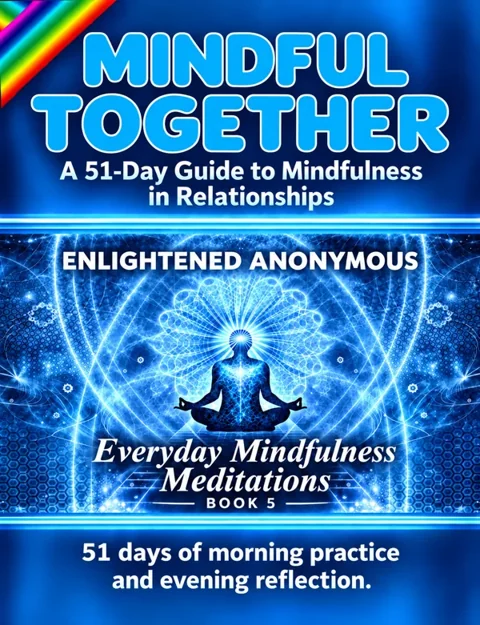
Everyday Mindfulness Meditations · Book 5
Mindful Together
A 51-Day Guide to Mindfulness in Relationships
51 days of mindfulness for listening, respectful boundaries and relationship repair.
Read the first day → · Read or listen
About this book
A better conversation can begin with the moment you stop preparing your reply and start hearing the person in front of you. Mindful Together is a 51-day guide to mindfulness in relationships. Through morning practices and evening reflections, it brings attention to listening, communication, boundaries, appreciation, and repair.
The exercises apply to partners, friends, family members, colleagues, and the ordinary exchanges that shape a shared life. Begin by meeting today's person rather than the version you have already prepared in your mind. Notice an assumption, ask a genuine question, or give a greeting your undivided attention.
Small practices make familiar habits easier to see: offering advice before checking whether it is wanted, treating a preference as an accusation, or expecting someone to understand a request you have never made clearly. Across the 51 days, you will explore how to: Listen for the actual request and reflect what you heard before adding your own view. Separate observations from accusations and intentions from their effects.
Choose a workable time for a difficult conversation and pause with a clear agreement to return. Offer an apology without bargaining for forgiveness or immediate reassurance. Express a respectful no, receive another person's no, and make agreements more specific.
Notice unequal effort, protect private information, and offer appreciation that names something real. These are practices for relationships as they are lived. A text message may need clarification because tone is missing.
A shared task may need a clearer agreement about who does what. An old family role may no longer describe the person you are now. The book encourages curiosity about these moments while keeping responsibility and personal limits in view.
The book contains 51 morning practices and 51 evening reflections. Allow a few minutes for each reading, try the practice in a suitable situation, and return to the questions later. Write a brief note or reflect quietly.
You can repeat, shorten, or adapt a practice. As you continue, the practices move into closeness and space, differences that may remain unresolved, digital expectations, promises, endings, and the pace of forgiveness. You will examine when dialogue is useful and when a limit, distance, or trusted outside perspective deserves attention.
The aim is to bring greater awareness to what you can do honestly within the relationship. Repair is given a practical place. You can acknowledge a mistake, change an arrangement, or make a more realistic promise without requiring the other person to respond on your timetable.
Appreciation also becomes more specific: recognizing hidden effort, sharing joy, and accepting a kind word without immediately dismissing it. Both difficult and welcome moments offer something to practice. Mindful Together is for readers who want to listen more fully, speak more clearly, and build everyday habits of mutual respect.
Its approach is accessible to meditation beginners and to anyone who already practices privately but wants to bring that attention into conversation. It does not require perfect agreement or uninterrupted harmony to make a moment meaningful. The evening reflections bring the day's conversation back into view: what was said, what you inferred, and what you might ask next time.
You can examine whether a pause included a return time, whether your no was clear, or whether an offer of help respected the other person's choice. Mindful communication becomes a practice you can test in an ordinary exchange. Choose one relational habit to continue: a shared greeting, a clear request, or a small ritual that gives you time together.
Themes in this book
- Mindful communication
- Listening in relationships
- Boundaries
- Repair after arguments
Read at your own pace
This volume is arranged as 51 days of morning practice and evening reflection. You can begin with one entry, try a manageable exercise, and return to the questions later. Repeat or adapt a day when that is useful.
Interested in a short practice first? Try a free written practice →
OPEN THE BOOK
Read the first day
A morning reading and its evening reflection.
DAY 1 · Morning
Meet today's person
Familiarity need not end curiosity. A familiar person arrives with a day you have not fully seen. The usual role can make their new answer difficult to hear: the cheerful one, the difficult one, the person who never needs help. Let today's encounter qualify the old description. Knowing someone includes remaining available to what has changed.
Before greeting someone familiar, notice what you assume about their mood. Leave room for information. Familiarity can help you care, but it does not tell you everything happening today.
DAY 1 · Evening
Meet today's person
What did you learn when you asked instead of relying on yesterday's picture? Record one actual answer or gesture that revised your assumption. Keep the new information open to change rather than replacing one fixed portrait with another.
Explore the opening seven days
- Meet today's person
- One undivided greeting
- Listen for the request
- Finish hearing
- Ask one real question
- Reflect before replying
- The first-week portrait
Read or listen
Ebook
For your reading app or device.
Links coming soon
Paperback
A printed copy to keep close.
Links coming soon
Hardcover
A case-bound edition for your shelf.
Links coming soon
Audiobook
Take the reading with you.
Links coming soon
FROM READING TO EVERYDAY LIFE
Read. Pause. Practise. Reflect.
Take a passage into your day. This companion invitation is optional; you can adapt it or stop whenever you wish.
A little is enough.
Read the opening sample slowly. Choose one idea to consider rather than trying to retain everything.
Read the sample →Make room to notice.
Listen to one ordinary sound without preparing a response.
Try it in context.
Explore a related practice, then notice whether anything feels useful in an ordinary moment.
Open the related practice →Keep your own question.
What did you hear before adding an interpretation?
Read and make an optional note →