 Meditation · Mindfulness · Enlightenment
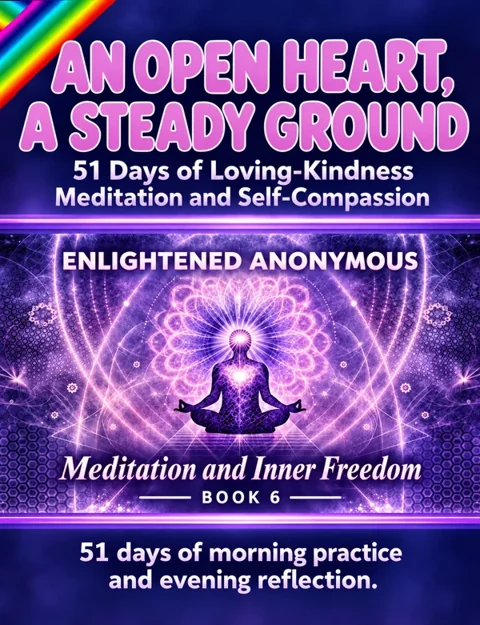
Meditation and Inner Freedom · Book 6
An Open Heart, A Steady Ground
51 Days of Loving-Kindness Meditation and Self-Compassion
51 days of reflection on goodwill, practical care and sustainable generosity.
Read the first day → · Read or listen
About this book
Kindness becomes clearer when you ask what would actually help. An Open Heart, A Steady Ground offers 51 days of loving-kindness meditation and self-compassion through morning practices and evening reflections. It connects a simple intention of goodwill with listening, gratitude, fairness, generosity, and everyday action.
Your own needs remain part of the circle, alongside the people you know and the people whose lives briefly meet yours. Begin with one person and one modest wish for their well-being. Notice what that intention helps you see before deciding whether to act.
A kind response may be a practical offer, a clearer question, a respectful limit, or the willingness to let someone choose for themselves. The book invites you to explore care through its effects as well as through the feeling that inspires it. During the 51 days, you will practice: Offering phrases of goodwill toward yourself, familiar people, strangers, and a wider circle of life.
Recognizing ordinary effort and expressing appreciation in specific terms. Asking what is wanted before giving advice, sharing a story, or offering help. Listening without taking over and respecting another person's dignity and choices.
Including fairness, consent, boundaries, and shared responsibility in compassionate action. Receiving help, noticing depletion, and making promises you can realistically keep. Someone is delayed.
A task has fallen repeatedly to the same person. A neighbor is difficult to understand. A friend is grieving, another is celebrating, and you are unsure what to offer.
These moments become invitations to look more closely, ask rather than assume, and choose a response suited to the person and the circumstances. The book contains 51 morning practices and 51 evening reflections. Allow a few minutes for each reading, try the practice in a suitable situation, and return to the questions later.
Write a brief note or reflect quietly. You can repeat, shorten, or adapt a practice. The book also turns compassion toward the helper.
You will examine the wish to feel useful, the reward of recognition, the difficulty of receiving, and the courage involved in disappointing someone kindly. These inquiries help you notice when an offer serves the other person and when it has become entangled with your own expectations. Self-compassion gives that examination a humane foundation.
As the circle widens, the practices explore public spaces, unseen workers, donations, useful skills, shared life, and the limits of imagining another person's experience. You will consider when to speak, when to accompany uncertainty, and when to acknowledge that you do not have the expertise a situation requires. The next step can be small and still deserve thoughtful attention.
Later reflections invite you to review compassion through concrete effects. Did the offer preserve choice? Was the promise sustainable?
Did someone else have room to contribute? What needs to change next time? The answers help you build a practical circle of care that includes generosity and honest limits.
The evening reflections ask what an act of care actually did. Was the help wanted? Did you listen before offering an explanation?
Could you receive a kindness without feeling obliged to repay it immediately? This gives loving-kindness practice a practical setting, including the ordinary limits of time, energy, and understanding. The final entries invite you to make a circle of care you can sustain.
A thoughtful interpretation, a clear correction, an honest limit, and room for another person to contribute can all belong within it. You will consider how to keep goodwill connected to the next useful step.
Themes in this book
- Loving kindness meditation
- Self compassion
- Care with boundaries
- Sustainable generosity
Read at your own pace
This volume is arranged as 51 days of morning practice and evening reflection. You can begin with one entry, try a manageable exercise, and return to the questions later. Repeat or adapt a day when that is useful.
Interested in a short practice first? Try a free written practice →
OPEN THE BOOK
Read the first day
A morning reading and its evening reflection.
DAY 1 · Morning
Begin with a person
Care and hostility can coexist in a person. Wanting to help does not make every impulse around helping useful. You may also want gratitude, agreement, or the feeling of being generous. Notice those wishes without letting them define the recipient's need. The act becomes more exact when it begins with what would actually support this person's day.
Bring to mind someone whose current circumstances you know a little about. Ask what would make today easier for them. Keep the answer practical and provisional.
DAY 1 · Evening
Begin with a person
What could you ask rather than assume about their needs? What did the wish help you notice that your first idea of helping missed? Choose one small question that leaves them free to decline help. A wish for their well-being should not decide their needs before they answer.
Explore the opening seven days
- Begin with a person
- See the ordinary effort
- The smallest useful kindness
- Listen without taking over
- Include yourself
- The person behind the delay
- First-week evidence
Read or listen
Ebook
For your reading app or device.
Links coming soon
Paperback
A printed copy to keep close.
Links coming soon
Hardcover
A case-bound edition for your shelf.
Links coming soon
Audiobook
Take the reading with you.
Links coming soon
FROM READING TO EVERYDAY LIFE
Read. Pause. Practise. Reflect.
Take a passage into your day. This companion invitation is optional; you can adapt it or stop whenever you wish.
A little is enough.
Read the opening sample slowly. Choose one idea to consider rather than trying to retain everything.
Read the sample →Make room to notice.
Listen to one ordinary sound without preparing a response.
Try it in context.
Explore a related practice, then notice whether anything feels useful in an ordinary moment.
Open the related practice →Keep your own question.
What did you hear before adding an interpretation?
Read and make an optional note →