 Meditation · Mindfulness · Enlightenment
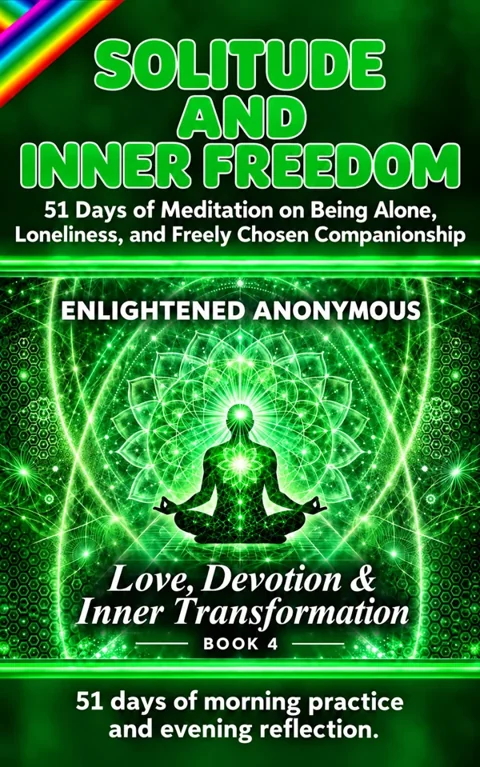
Love, Devotion & Inner Transformation · Book 4
Solitude and Inner Freedom
51 Days of Meditation on Being Alone, Loneliness, and Freely Chosen Companionship
51 days of reflection on being alone, loneliness and freely chosen companionship.
Read the first day → · Read or listen
About this book
Time alone can bring relief, loneliness, restlessness, or several feelings at once. Solitude and Inner Freedom offers 51 days of meditation on being alone, loneliness, and freely chosen companionship. Its morning practices and evening reflections examine time without company and the relationships around it.
The starting point is your actual experience of an interval, rather than an ideal of complete independence. Being by yourself and feeling lonely can occur together, but they are different matters. A quiet hour may be welcome on one day and difficult on another.
Company may offer warmth, help, or an opportunity to avoid hearing a feeling. The book invites careful attention to these differences while respecting the ordinary human need for contact and support. The seven weeks explore: Solitude and loneliness through short, manageable occasions.
The wish for another person to complete an unfinished feeling. Practical dependence, help, and direct requests for company. Time without a social role or an audience.
Personal space while remaining in a relationship. Companionship that leaves both people free to respond. Returning to ordinary life with a clearer account of what you need.
Exercises may involve choosing a brief interval alone, delaying the impulse to report an experience, or noticing what changes when you put a device away. You are not required to enjoy the quiet. If loneliness is strong, reaching out to someone you trust may be the useful response.
An accurate description can include a wish for company as readily as pleasure in being unaccompanied. Other days bring the inquiry into friendship. You might ask directly for a meeting instead of waiting for someone to guess what you want.
You may explain a limit before resentment makes the decision for you, or decline an invitation while keeping your affection clear. These occasions explore the space between connection and pressure without making distance a measure of spiritual progress. Inner freedom is approached through particular choices.
Can an enjoyable moment be worthwhile before you share it? Can you receive support without calling the need a personal failure? Can another person have plans that differ from yours without the difference becoming a verdict on the relationship?
The readings leave room for disappointment and a practical conversation about it. Each of the 51 days offers a morning exercise and an evening reflection that follows the same question. Seven weeks are followed by two review days to help you choose a continuation that fits your life.
The evening entries ask about the occasion you lived through, including what remained unresolved. Selected spiritual discourse themes about aloneness, relationship, and dependence supply the starting questions. The book develops original reflections and practices around them rather than translating or condensing the discourses.
This book suits readers interested in meditation on solitude, thoughtful reflection on loneliness, and relationships with room for personal space. It can be useful when time alone is unfamiliar, when sharing feels compulsory, or when you want companionship to be more openly chosen. A flexible arrangement may be enough: an interval you know will end, a clear invitation, a shorter visit, or a task enjoyed without an audience.
The book asks you to notice what such choices make possible. Care for your own space can coexist with care for the people whose company matters to you. Book 4 in Love, Devotion & Inner Transformation, Solitude and Inner Freedom can be read independently.
Themes in this book
- Solitude and loneliness
- Being alone freely
- Inner freedom
- Healthy companionship
Read at your own pace
This volume is arranged as 51 days of morning practice and evening reflection. You can begin with one entry, try a manageable exercise, and return to the questions later. Repeat or adapt a day when that is useful.
Interested in a short practice first? Try a free written practice →
OPEN THE BOOK
Read the first day
A morning reading and its evening reflection.
DAY 1 · Morning
Alone and lonely
Being by yourself and feeling lonely are related experiences, but they are not identical. Choose a short, manageable period without company. Notice what is present before explaining it: sounds, restlessness, relief, a wish to speak to someone. You do not need to turn the period into an achievement. If loneliness is strong, contact with someone you trust may be the useful response. The inquiry begins with an accurate account of this interval.
DAY 1 · Evening
Alone and lonely
Recall the interval through its details: sounds, restlessness, relief, or a wish for contact. Solitude and loneliness may have appeared together; your account can include both without ranking them. What did you notice before calling the interval good or bad?
Explore the opening seven days
- Alone and lonely
- A chosen interval
- The desire to report
- Relief in quiet
- A lonely moment
- Company without attention
- Your first distinctions
Read or listen
Ebook
For your reading app or device.
Links coming soon
Paperback
A printed copy to keep close.
Links coming soon
Hardcover
A case-bound edition for your shelf.
Links coming soon
Audiobook
Take the reading with you.
Links coming soon
FROM READING TO EVERYDAY LIFE
Read. Pause. Practise. Reflect.
Take a passage into your day. This companion invitation is optional; you can adapt it or stop whenever you wish.
A little is enough.
Read the opening sample slowly. Choose one idea to consider rather than trying to retain everything.
Read the sample →Make room to notice.
Notice where your body meets a supporting surface.
Try it in context.
Explore a related practice, then notice whether anything feels useful in an ordinary moment.
Open the related practice →Keep your own question.
What can remain unfinished for tonight?
Read and make an optional note →