 Meditation · Mindfulness · Enlightenment
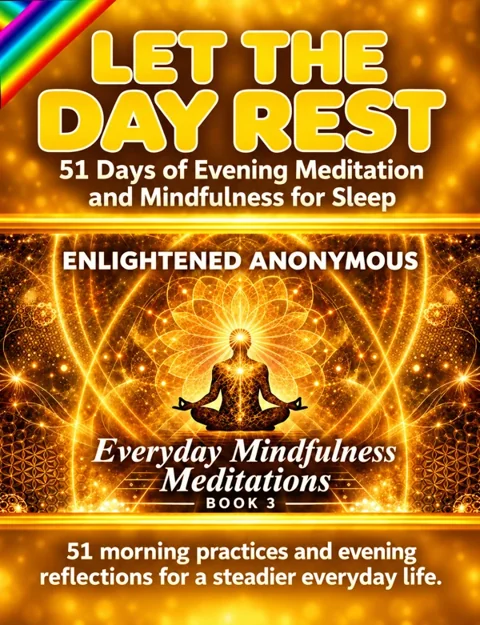
Everyday Mindfulness Meditations · Book 3
Let the Day Rest
51 Days of Evening Meditation and Mindfulness for Sleep
51 days of evening practice for winding down, unfinished thoughts and the transition toward rest.
Read the first day → · Read or listen
About this book
The day can end while some things remain unfinished. Let the Day Rest offers 51 days of evening meditation and mindfulness for sleep, with morning preparation and evening reflection. It is a companion for the transition from doing to resting: the moment when work follows you home, tomorrow starts speaking too loudly, or bedtime becomes another task you feel you should perform well.
The book contains 51 morning preparations and 51 evening reflections. Consider the morning suggestion during the day, then return to the evening entry as you wind down. Use your own rest period if you work changing shifts.
You can shorten or repeat a practice. Inside, you will explore ways to: Identify the last necessary task and create a believable signal that today's effort can stop. Give unfinished concerns a place on paper and a realistic time to revisit them.
Make simple decisions about devices, news, shared space, and the evening's remaining demands. Notice an unforced breath, warm water, a supported posture, or the weight of a familiar blanket. Meet self-criticism, sadness, and the aftermath of an argument with a more thoughtful response.
Build a portable ritual for changed schedules, travel, caregiving, and interrupted routines. The exercises begin with what is available. A notebook can hold tomorrow's first step.
An ordinary washing routine can become a brief sensory practice. A short agreement can make a shared evening more workable. You are invited to notice which conditions help you settle into the moment, without repeatedly checking whether they have produced sleepiness.
Later entries make room for wakefulness, the pressure of watching the clock, and the comparison between your nights and someone else's. The book also considers the day after poor sleep, asking for appropriate support, and keeping useful notes without turning them into a score. Rest deserves a kind response even when sleep is uncertain.
There is room here for shared evenings and evenings alone, noisy surroundings and unfamiliar rooms, good news and unresolved feelings. The practices encourage specific, modest choices: asking for company, arranging relief, lowering an unnecessary expectation, or letting a pleasant moment remain pleasant without demanding its return. You can create continuity while allowing each evening to be different.
Let the Day Rest is for readers looking for a thoughtful bedtime routine, a gentler way to put work aside, or brief mindfulness practices suited to tired moments. No previous meditation experience is needed. The book offers reflection and everyday care rather than a promise to cure insomnia or make sleep arrive on command.
Evening mindfulness starts earlier than bedtime. A morning entry may ask you to notice what usually follows you into the night, decide when one task will end, or leave tomorrow a short reminder. The matching evening reflection lets you review what actually helped and what still needs attention.
This gives the book a practical place in the whole day rather than adding a demanding exercise at its end. When an evening is unsettled, you can choose a familiar sensory detail and let it be enough for the moment. You might notice the support of a chair, the weight of bedding, or an ordinary sound.
If a concern has a useful next step, record it briefly. If the concern cannot be resolved tonight, consider when to return to it and what kind of company or care would help meanwhile. Let the Day Rest is Book 3 in Everyday Mindfulness Meditations by Enlightened Anonymous.
It can be read independently.
Themes in this book
- Evening mindfulness routine
- Bedtime rumination
- Letting the day go
- Restful evenings
Read at your own pace
This volume is arranged as 51 days of morning practice and evening reflection. You can begin with one entry, try a manageable exercise, and return to the questions later. Repeat or adapt a day when that is useful.
Interested in a short practice first? Try a free written practice →
OPEN THE BOOK
Read the first day
A morning reading and its evening reflection.
DAY 1 · Morning
What evening means
Rest need not oppose participation. An evening is a part of life, rather than an interval in which you must recover perfectly for tomorrow. There may still be care, conversation, or a necessary task. There can also be an ending to optional work. Recognizing both allows an ordinary evening to have a shape of its own.
Notice what you expect evening to accomplish: recovery, unfinished work, family time and perhaps everything missed during daylight. A crowded expectation can make the day's ending feel like another beginning.
DAY 1 · Evening
What evening means
Choose one purpose for tonight. What can wait without being abandoned? Name one expectation you can set aside without judging the evening a failure. Distinguish caring for tomorrow from continuing today's work indefinitely. One clear reminder can protect the unfinished task without requiring you to complete it before resting.
Explore the opening seven days
- What evening means
- The last necessary task
- Notice your surroundings
- The evening queue
- An ending phrase
- An ordinary landing
- Review the first week
Read or listen
Ebook
For your reading app or device.
Links coming soon
Paperback
A printed copy to keep close.
Links coming soon
Hardcover
A case-bound edition for your shelf.
Links coming soon
Audiobook
Take the reading with you.
Links coming soon
FROM READING TO EVERYDAY LIFE
Read. Pause. Practise. Reflect.
Take a passage into your day. This companion invitation is optional; you can adapt it or stop whenever you wish.
A little is enough.
Read the opening sample slowly. Choose one idea to consider rather than trying to retain everything.
Read the sample →Make room to notice.
Notice where your body meets a supporting surface.
Try it in context.
Explore a related practice, then notice whether anything feels useful in an ordinary moment.
Open the related practice →Keep your own question.
What can remain unfinished for tonight?
Read and make an optional note →