 Meditation · Mindfulness · Enlightenment
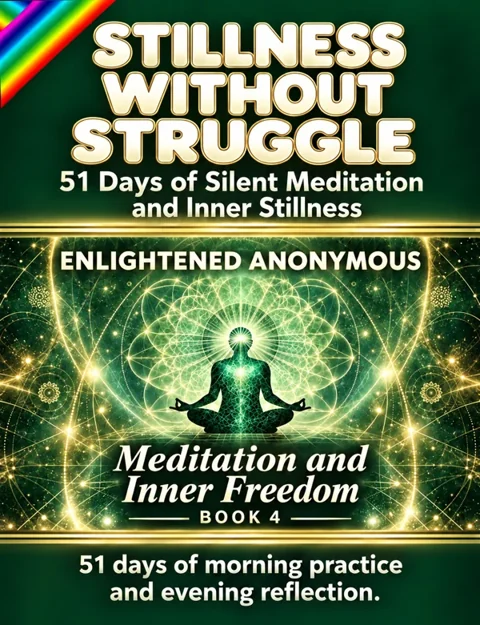
Meditation and Inner Freedom · Book 4
Stillness Without Struggle
51 Days of Silent Meditation and Inner Stillness
51 days of reflection on stillness, solitude and reducing unnecessary input.
Read the first day → · Read or listen
About this book
Quiet may already be available in a smaller form than you expected. Stillness Without Struggle offers 51 days of silent meditation and inner stillness through brief practices in listening, solitude, unhurried activity, and ordinary attention. Morning entries and evening reflections help you explore the quiet you want, the conditions you live with, and what happens when you stop asking a pause to produce a special result.
Begin by noticing what quiet means to you. It might mean less sound, fewer demands, a slower pace, or a moment when nobody needs an answer. The book helps you distinguish these needs and try a manageable interval that responds to one of them.
A room, a meal, a familiar route, or the space between tasks can provide enough material for the practice. Across the 51 days, you will explore: Brief intervals alone, comfortable stillness, and the sounds that remain within silence. The impulse to fill an empty moment with a screen, explanation, or new task.
Private enjoyment, boredom, and the pressure to make every activity productive. The difference between chosen solitude and loneliness that asks for connection. Shared silence, household agreements, and quiet within the responsibilities of care.
A realistic rhythm that carries moments of stillness back into conversation and action. The exercises invite patient contact with ordinary details. Notice one object without rushing to describe it.
Take an unrecorded walk while staying aware of your surroundings. Read a short passage slowly, pause between visits, or make a little space at the threshold of evening. The setting does not have to become silent before you can explore how you meet it.
The book contains 51 morning practices and 51 evening reflections. Allow a few minutes for each reading, try the practice in a suitable situation, and return to the questions later. Write a brief note or reflect quietly.
You can repeat, shorten, or adapt a practice. As you continue, the book explores silence after disagreement, the conversation you may be avoiding, and the responsibility waiting outside a quiet moment. Solitude is considered alongside participation in a shared world.
The exercises ask how a pause affects the way you return: whether you hear more clearly, make a more considered decision, or recognize something that deserves your attention. There is also room for wonder, weather, a small celebration, and an afternoon with less input. You will examine the wish to perform a spiritual identity and the expectation that a meaningful practice should look impressive.
Ordinary quiet can have value without being recorded, explained, or turned into evidence of personal progress. Later entries help you choose a portable practice and a rhythm you can realistically repeat. You might keep one place open in the day, share a comfortable silence with someone, or protect a brief interval from unnecessary demands.
What matters is how the arrangement works in your life, including days when noise, company, or urgent responsibilities change the plan. The evening reflections ask how the pause affected your return to life. Did you come back ready to listen, or use quiet to put off a necessary conversation?
Did solitude suit the moment, or would company have been kinder? This approach to silent meditation helps you distinguish different needs without treating every wish to withdraw as the same thing. Stillness Without Struggle is Book 4 in Meditation and Inner Freedom by Enlightened Anonymous.
It can be read independently.
Themes in this book
- Stillness meditation
- Quiet without struggle
- Solitude practice
- Less mental noise
Read at your own pace
This volume is arranged as 51 days of morning practice and evening reflection. You can begin with one entry, try a manageable exercise, and return to the questions later. Repeat or adapt a day when that is useful.
Interested in a short practice first? Try a free written practice →
OPEN THE BOOK
Read the first day
A morning reading and its evening reflection.
DAY 1 · Morning
What you call quiet
Rest can be a support rather than an escape. Quiet may mean less sound, fewer decisions, privacy, or a welcome pause in company. These needs are related but not identical. Naming the one that is present gives the interval a useful purpose. You can seek a real form of support without requiring your life to become perfectly silent.
Describe a quiet moment you would welcome. Is it less sound, fewer demands, privacy or freedom from interruption? Naming the need helps you seek the right kind of quiet.
DAY 1 · Evening
What you call quiet
Which kind was most needed today? What request would describe the need accurately to someone else? Distinguish less sound, time alone, and fewer demands. Naming the actual need may help you arrange a useful interval instead of seeking an ideal quiet.
Explore the opening seven days
- What you call quiet
- A small interval alone
- Silence contains sound
- The first impulse
- Comfortable stillness
- The company of a room
- First-week understanding
Read or listen
Ebook
For your reading app or device.
Links coming soon
Paperback
A printed copy to keep close.
Links coming soon
Hardcover
A case-bound edition for your shelf.
Links coming soon
Audiobook
Take the reading with you.
Links coming soon
FROM READING TO EVERYDAY LIFE
Read. Pause. Practise. Reflect.
Take a passage into your day. This companion invitation is optional; you can adapt it or stop whenever you wish.
A little is enough.
Read the opening sample slowly. Choose one idea to consider rather than trying to retain everything.
Read the sample →Make room to notice.
Notice where your body meets a supporting surface.
Try it in context.
Explore a related practice, then notice whether anything feels useful in an ordinary moment.
Open the related practice →Keep your own question.
What can remain unfinished for tonight?
Read and make an optional note →